What to say in a graduation message
Thirty seconds and one true detail is enough. A simple shape for any graduation message, lines for every path and every relationship, and words for a hard results day.
By the Warmcut team · · 8 min read

You have the phone up and the red dot is on. You say "Congratulations", and then nothing comes. You watched the early starts and the late nights that got them here, and the only word that arrives is the one printed on every card at the newsagent. You stop recording and tell yourself you will try again tomorrow.
A good graduation message does not need to be a speech. It needs three things: one thing you saw them do, why it made you proud, and one wish for what comes next. Said out loud, that takes thirty seconds to a minute. In a card, it is three or four lines. The same shape works for Year 12, uni, TAFE, an apprenticeship, or study fitted around work and family.
What should a graduation message say?
- Something you saw. One real moment from these years. The bus at 6.40 every morning. The essay they rewrote three times. The week they nearly gave up and did not. Small and true beats big and general.
- Why it made you proud. Say it plainly. Proud of the effort, the kindness, the way they kept going. Not the mark.
- A wish for what comes next. Short, and about them. One line of advice at most.
Here is the shape as a grandparent might say it, in about thirty seconds:
Hello, darling, it's Nan. I keep thinking about that winter you did your maths at my kitchen table every Tuesday and ate all my biscuits. You never once gave up on those questions. I'm so proud of you, and not because of the marks. Because of that. Wherever you go next, there's always a seat at my table.
Most people speak at about 125 to 150 words a minute, so a one-minute message is shorter than it feels. Jot three dot points, not a script. A script read to camera tends to sound read.
What can family say to a graduate?
Family know the most stories. Choose the one only you could tell.
From a parent
- "Every time it got hard, you had your bad day and then sat back down. I've never been prouder than watching you finish."
- "You did the boring bits properly: the early starts, the drafts nobody read, the shifts before class. That's what I'll remember."
- "Whatever the marks say, you finished. That was always the part that mattered to us."
From a grandparent
- "When you were small you asked me how planes stay up. Now you're off to study engineering. You'll have to explain it to me one day."
- "I left school at fifteen. Watching you finish means more to me than I can say." (Only if it is true.)
- "Your grandfather would have been in the front row, clapping too loudly." (If someone is missing from the day, a gentle mention can mean a lot.)
From a brother or sister
- "You read my essays when I was in Year 12. Now it's your turn, and I'm so proud."
- "I teased you for studying on Friday nights. You were right. Proud of you."
From an aunt, uncle or family friend
- "I've known you since you were hiding under the table at Christmas. Look at you now."
What can friends, teachers and coaches say?
From a friend
- "Double maths on a Friday, the bus home, the night before every exam. I'd do it all again with you in the next seat."
- "From the first day of Year 7 to the last exam. I couldn't have done it without you."
- "Wherever you end up next year, I'm coming to visit."
From a teacher, tutor or coach
- "I remember the first essay you handed in, and I remember your last. Be proud of the distance between them."
- "You asked the questions everyone else was too shy to ask. Keep doing that."
What do you say for Year 12, uni, TAFE or an apprenticeship?

Match the message to what they actually did.
- Year 12. Celebrate finishing, not the score. Results come out in mid-December, depending on the state, so send yours before then. Our Year 12 graduation gift ideas have the dates.
- University. Name the work behind the degree. "Three years of lectures and Saturday shifts, and you still showed up for everyone else."
- TAFE or an apprenticeship. Be proud of the skill. "Four years of 6am starts, and now you're a qualified sparky."
- A mature-age graduate. Notice the juggling. "You did this after work, after the kids were in bed. We saw it."
- A longer road. An extra year, a second try or a change of course: "It took longer than you planned. It counts exactly the same."
In the US and Canada, the same shape works for high school and college graduations in May and June.
What do you say after a hard results day?
Sometimes the number is lower than they hoped. Let them bring up the score first, or not at all. ReachOut, the youth mental health service, advises parents to let their teen lead the conversation and to listen before reacting. Then keep it short:
- "I'm proud of the person who sat those exams. That hasn't changed."
- "You don't owe anyone a number."
- "There's more than one way to get where you're going."
- "I'm not going anywhere. Talk when you're ready."
If you are not close enough to know how it went, do not ask. Send "Big day today. However it went, I'm proud of you." Leave the plan B talk for a few weeks, and let them raise it.
What should you not say to a graduate?
- The score. Do not ask about the ATAR, the GPA or the marks. Results are private, and some graduates will not get the number they hoped for, or will not get one at all. Ask what they are proud of or looking forward to instead.
- "So, what's next?" They have probably been asked all year. Wish them well instead of asking for a plan.
- "These are the best years of your life." It sounds kind, but it can land as "it is all downhill from here".
- Comparisons. Not with a sibling, a cousin, a friend, or you at their age.
- Long advice. One line. They will hear plenty of speeches.
What are some short graduation messages for a card?
If you only have room for a line or two:
- "You did it. We watched the whole way, and we're so proud."
- "The hard work was yours. The pride is ours."
- "Proud of you today, and of every day you didn't give up."
- "It went fast for us. We know it didn't always feel fast for you."
For a son or daughter
- "We've been proud of you for years. Today we get to say it out loud."
- "Whatever comes next, home is still here when you need it."
- "You were always going to get here. We just got to watch."
- "However far you go, you're still our kid. Proud of you."
- "Proud doesn't cover it. All our love, Mum and Dad."
For a university graduate
- "You walked in not sure you belonged. You're walking out with a degree."
- "First in the family with a degree. We'll be saying that for years."
- "A degree, a job and a life, all at once. We still don't know how you fitted it in."
- "To the newest graduate in the family. We're so proud."
For a TAFE graduate or new tradie
- "Qualified. Nobody can take that off you."
- "From first-year apprentice to fully qualified. We knew you'd get there."
- "A skill in your hands is yours for life. So proud of you."
For a mature-age graduate
- "You did this on top of a whole life. We noticed every bit of it."
- "Proof that it's never too late. So proud of you."
How do you say it on video?
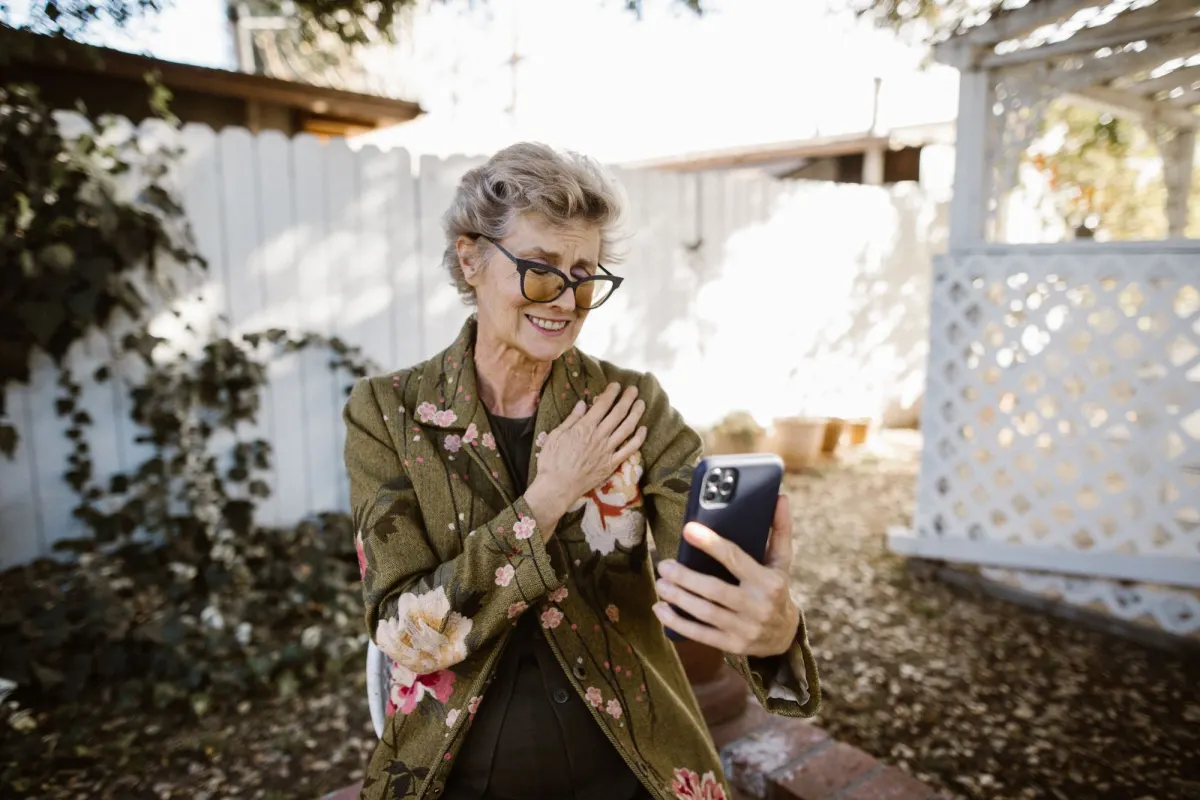
- Say their name first. "Mia, it's Uncle Dave." In a film with many voices, it tells them who is speaking.
- Talk to them, not to an audience. Say "you", as if they were across the table.
- Keep the take with the wobble. A voice that cracks a little is part of the message.
For light, sound and where to hold the phone, the step-by-step group video guide covers the basics.
How do you get everyone's messages into one film?
One message is lovely. Twenty, from the people who saw each stage, make something a graduate can keep. That is what a graduation video from family and friends is for. You send one link about two weeks before the ceremony. Each person records a minute on their phone, with no app and no account. Warmcut trims the pauses and false starts, levels every voice and puts the messages in order with music and captions, using only what people actually said. Collecting messages and watching the finished film is free, with a small Warmcut watermark. Pay once, from US$19, to share and download it. Over 10 people? The free film uses the first 10 to record, and paying makes it with everyone. How it works has the details.
If it is a surprise, here is how to collect the messages without them finding out. And if a few people go quiet, why some people never send their video message has reminders that work.
Questions
What is a good short graduation message?
Name one thing you saw them do and say you are proud. “The hard work was yours. The pride is ours.” works for almost anyone. Two or three lines is plenty in a card, and thirty seconds to a minute on video.
How long should a graduation video message be?
Thirty seconds to a minute. Most people speak at about 125 to 150 words a minute, so a minute is shorter than it feels: one memory, one line about why you are proud and one wish fills it.
What should you not say to a graduate?
Skip questions about their ATAR, marks or plans, comparisons with brothers, sisters or cousins, and “these are the best years of your life”. Keep advice to one line. Ask what they are proud of or looking forward to, not what they scored.
What do you say to a graduate whose results were disappointing?
Talk about finishing, and about who they are. “I’m proud of the person who sat those exams” works whatever the number. Let them bring up the score first, or not at all, and leave the talk about plan B for a few weeks.
What do you write in a graduation card for a friend?
Something only the two of you share: the bus home, the class you sat through together, the night before an exam. Then one line about what is next, such as “Wherever you end up next year, I’m coming to visit.”
Sources
- ReachOut Parents, “How to manage teenagers’ expectations after exams” (24 November 2023): let them lead, listen before reacting, do not compare
- The Conversation (Van Bergen, Bird and Buckley-Walker, 11 December 2025), “Year 12 results are being released. What if you don’t want to share your ATAR with friends and family?”
- Charles Darwin University, Oral presentations (average speaking speed about 125–150 words a minute)
Read next
Graduation
Year 12 graduation gifts that celebrate them, not the ATAR
Ideas for the end of thirteen years of school, from words that last to gifts for uni, an apprenticeship or a gap year. Plus when to give it, and what to spend.
Organising the gift
How to make a group video, step by step
Eight steps from the first message to the moment it plays, with an invite you can copy, recording tips and a two-week birthday plan.
Organising the gift
Why some people never send their video message
It is almost never about the person you are celebrating. It is the camera, the timing or the words. Here is what helps.